Archives

Jul182025

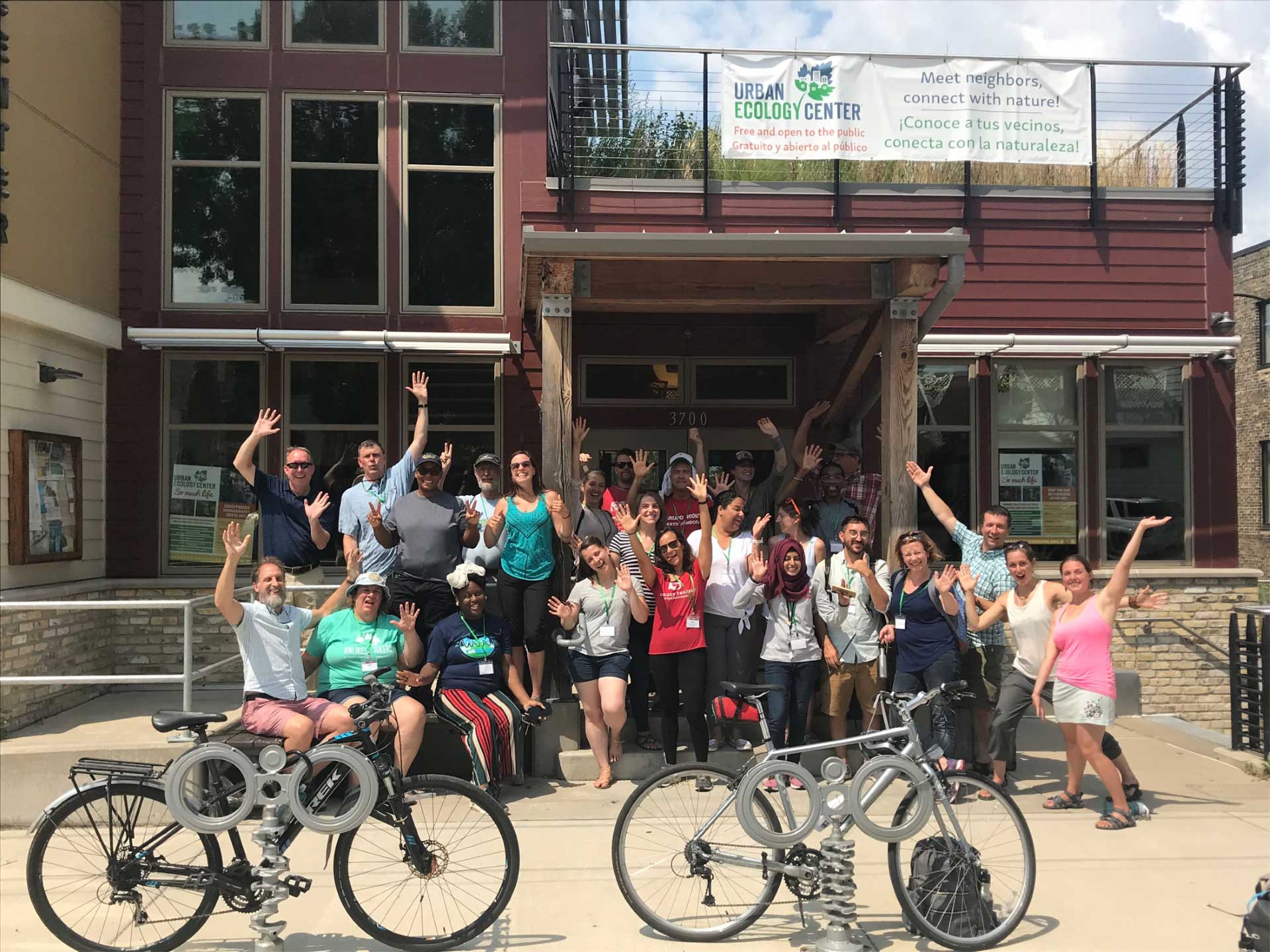
Urban Ecology Center – Washington Park

The Urban Ecology Center (UEC) is excited to host a training session at its breathtakingly expanded Washington Park branch. Attendees of this training should expect to focus on the variety of wild places found in cities that reveal the significance of access to nature for exploration and education. We will also emphasize the importance of ecological resilience for our communities. Sessions are led by subject matter experts from organizations across the Milwaukee area. The sessions will be a mix of interactive classroom and field excursions, taking advantage of the UEC facilities and adjacent parks in multiple neighborhoods.

As part of each session, participants will explore connections between art and the practice of the naturalist. For example, in looking together at nature as our baseline, we will compare plants across the continuum of natural/ancestral knowledge, traditional textile methods, EcoArt, and cultural uses.

This training will be led by Chris Young and Martina (mars) Patterson. Chris has worked closely with UEC staff for many years advancing their model for providing environmental education for people in cities to communities across North America. He is a professor emeritus at Alverno College and current director of the Conservation and Environmental Science program at UW-Milwaukee. He serves as the curriculum chair for the Land Restoration School. Artist, Ecological Conjuror, mars, has earned certifications in ethno-horticultural practices and ecological restoration. mars also serves on the leadership Council Ring of the Land Restoration School. Examples of mars’ leadership as an ecological restorationist can be seen throughout Milwaukee’s northwest side in pockets of urban woodlands, mesic prairies, and oak savannas.

The Wisconsin Master Naturalist program is a network of well-informed volunteers dedicated to conservation service, leadership, and lifelong learning. The Master Naturalist training provides 40 hours of education in a variety of natural history topics and Master Naturalist service areas. Through expert-led trainings, Master Naturalists are equipped to address challenges facing the state by making positive impacts through stewardship, citizen science, and educational activities. Trainings have an emphasis on outdoor field experiences with some classroom instruction and are taught by professional natural resources educators and scientists. Once trained, Wisconsin Master Naturalists record 40 hours of service and 8 hours of advanced training each year to maintain certification and receive a recognition pin.

Dec052024
Four people stand at the edge of a lily-pad covered pod making observations of nature

Schlitz Audubon Nature Center

Schlitz Audubon Nature Center will be hosting its seventh Wisconsin Master Naturalist training. The training will be held almost entirely outside for field experiences at Schlitz Audubon’s 185 acres. We will explore the property’s diverse habitats including wetlands, forests, restored prairies, and the shoreline of Lake Michigan. Participants will meet birds from our Raptor Program and learn from our skilled naturalists about community science, nature education, conservation, and more. Our Saturday field experiences will occur at Garrison’s Glen (near Grafton) and Cedarburg Bog State Natural Area (Saukville). Participants are responsible for their own transportation or coordinating ride shares to field locations.

The Wisconsin Master Naturalist program is a network of well-informed volunteers dedicated to conservation service, leadership, and lifelong learning. The Master Naturalist training provides 40 hours of education in a variety of natural history topics and Master Naturalist service areas. Through expert-led trainings, Master Naturalists are equipped to address challenges facing the state by making positive impacts through stewardship, citizen science, and educational activities. Trainings have an emphasis on outdoor field experiences with some classroom instruction and are taught by professional natural resources educators and scientists. Once trained, Wisconsin Master Naturalists record 40 hours of service and 8 hours of advanced training each year to maintain certification and receive a recognition pin.

Dec052024
monarch butterfly on purple plant

St. Croix Valley

Carpenter Nature Center and The Friends of Willow River & Kinnickinnic State Parks are partnering to offer the Wisconsin Master Naturalist training. We will meet one Saturday a month, March-August, at various locations throughout the St. Croix Valley. The training will include some time indoors but will focus mostly on local and regional field experiences to exceptional sites for learning in our topic areas (geology, ecology, plant communities, wildlife, interpretation, water, and human impacts). Many regional experts will be sharing their knowledge, research, tips, and inspiration with us as they lead or present parts of the training.

The Wisconsin Master Naturalist program is a network of well-informed volunteers dedicated to conservation service, leadership, and lifelong learning. The Master Naturalist training provides 40 hours of education in a variety of natural history topics and Master Naturalist service areas. Through expert-led trainings, Master Naturalists are equipped to address challenges facing the state by making positive impacts through stewardship, citizen science, and educational activities. Trainings have an emphasis on outdoor field experiences with some classroom instruction and are taught by professional natural resources educators and scientists. Once trained, Wisconsin Master Naturalists record 40 hours of service and 8 hours of advanced training each year to maintain certification and receive a recognition pin.

Dec052024

Heckrodt Wetland Reserve

Heckrodt Wetland Reserve, located in Menasha, Wisconsin, will host its first ever Wisconsin Master Naturalist training September 15–20, 2025. Heckrodt Wetland Reserve is a 91-acre urban nature reserve with habitats including forested wetland, cattail marsh, open water, created prairie, open field, and upland forest. Persisting despite the urbanization that continues to grow around it, the Reserve is home to numerous species of reptiles, amphibians, and mammals. Migrating songbirds and waterfowl nest and feed in its protection. Through this training participants will experience and learn about the flora and fauna of the urban Fox Valley Region. This training will focus on our unique wetland habitat, urban wildlife, the geological history of our surrounding area, the water quality of our local waterways and how humans play a role in these ecosystems. The Reserve has various volunteer needs including citizen science, education, habitat and site maintenance. We hope you will join us as we connect to our local nature.

The Wisconsin Master Naturalist program is a network of well-informed volunteers dedicated to conservation service, leadership, and lifelong learning. The Master Naturalist training provides 40 hours of education in a variety of natural history topics and Master Naturalist service areas. Through expert-led trainings, Master Naturalists are equipped to address challenges facing the state by making positive impacts through stewardship, citizen science, and educational activities. Trainings have an emphasis on outdoor field experiences with some classroom instruction and are taught by professional natural resources educators and scientists. Once trained, Wisconsin Master Naturalists record 40 hours of service and 8 hours of advanced training each year to maintain certification and receive a recognition pin.

Dec052024

Kishwauketoe Nature Conservancy

Kishwauketoe Nature Conservancy (KNC), Williams Bay, WI, will host Wisconsin Master Naturalist training in a week-long program from July 21 to July 26, 2025. Instructors and expert guest speakers will illuminate your understanding of geology, ecology, water, aquatic life, plant communities, wildlife, natural history, human connections, Master Naturalist service, weather and climate. KNC is an ecologically diverse 231-acre parcel located on Geneva Lake and is the largest undeveloped watershed feeding this crystal-clear glacial lake. Ecosystems include wetland, creeks, meadow, prairie, oak opening, woodlands and an arboretum. The training will include some indoor activities and presentations, but will focus mostly on local field experiences and restoration initiatives. This is a great opportunity to network with others sharing like interests. If you enjoy spending time outdoors in state, county and local parks and natural areas, and helping others better understand our natural resources or assisting with the stewardship, this training is for you!

The Wisconsin Master Naturalist program is a network of well-informed volunteers dedicated to conservation service, leadership, and lifelong learning. The Master Naturalist training provides 40 hours of education in a variety of natural history topics and Master Naturalist service areas. Through expert-led trainings, Master Naturalists are equipped to address challenges facing the state by making positive impacts through stewardship, citizen science, and educational activities. Trainings have an emphasis on outdoor field experiences with some classroom instruction and are taught by professional natural resources educators and scientists. Once trained, Wisconsin Master Naturalists record 40 hours of service and 8 hours of advanced training each year to maintain certification and receive a recognition pin.

Dec052024
A small bird being held by a person's hand for bird banding

North Lakeland Discovery Center

The North Lakeland Discovery Center, in beautiful Northern Wisconsin, will host a Wisconsin Master Naturalist training in August. Programming will be held at the Discovery Center campus. Guest experts, from professors to Wisconsin Department of Natural Resources staff, will share a wealth of knowledge each day.

The Wisconsin Master Naturalist program is a network of well-informed volunteers dedicated to conservation service, leadership, and lifelong learning. The Master Naturalist training provides 40 hours of education in a variety of natural history topics and Master Naturalist service areas. Through expert-led trainings, Master Naturalists are equipped to address challenges facing the state by making positive impacts through stewardship, citizen science, and educational activities. Trainings have an emphasis on outdoor field experiences with some classroom instruction and are taught by professional natural resources educators and scientists. Once trained, Wisconsin Master Naturalists record 40 hours of service and 8 hours of advanced training each year to maintain certification and receive a recognition pin.

Dec052024
a group of people sit at picnic tables with a lake in the background. A park ranger is standing and talking to the group.

Friends of Pheasant Branch Conservancy

This training focuses on the Pheasant Branch Conservancy and watershed. Approaching the full curriculum through a lens of water, we explore the historic and current health of Madison lakes, nearby streams, and remediation efforts centered on prairies. At the Conservancy we consider groundwater, surface water, restoration management, education and outreach efforts, programming opportunities, plant, animal, and insect populations, policies, multiple use challenges, benefits, and partnerships. Field experiences to Black Earth Creek (BEC) and Devil’s Lake offer an experience and study of water quality and the distinct topography, soils, and geologic features associated with glaciated and non-glaciated areas. We discuss several invasive species, their unique ability to survive, and strategies and tips to slow the spread, including decontaminating equipment. Impacts and remediation of changing conditions, shifts in our understanding and relationship with nature, and learning about diverse ways that people experience natural spaces and accessibility are also addressed. Overall, this training packed full of indoor and outdoor time, some sitting, standing, and walking, some lecture, and opportunities for hands-on exploration of themes and presentation of concepts.

The Wisconsin Master Naturalist program is a network of well-informed volunteers dedicated to conservation service, leadership, and lifelong learning. The Master Naturalist training provides 40 hours of education in a variety of natural history topics and Master Naturalist service areas. Through expert-led trainings, Master Naturalists are equipped to address challenges facing the state by making positive impacts through stewardship, citizen science, and educational activities. Trainings have an emphasis on outdoor field experiences with some classroom instruction and are taught by professional natural resources educators and scientists. Once trained, Wisconsin Master Naturalists record 40 hours of service and 8 hours of advanced training each year to maintain certification and receive a recognition pin.

Dec052024
a line of people walking through tall vegetation toward a large oak tree with outspread branches.

Retzer Nature Center

Waukesha County Parks and Friends of Retzer Nature Center are hosting a week-long Master Naturalist training at Retzer Nature Center, a 480-acre County Park located in the heart of Waukesha County. Join us from July 21–26, 2025, for an exploration of the prairies, forests, waters, wildlife, and geology of Southeast Wisconsin. The training will include time at Retzer Nature Center and local field experiences incorporated into each day throughout Waukesha County (i.e. Lapham Peak, Fox River Park, Pewaukee Lake, just to name a few).

The Wisconsin Master Naturalist program is a network of well-informed volunteers dedicated to conservation service, leadership, and lifelong learning. The Master Naturalist training provides 40 hours of education in a variety of natural history topics and Master Naturalist service areas. Through expert-led trainings, Master Naturalists are equipped to address challenges facing the state by making positive impacts through stewardship, citizen science, and educational activities. Trainings have an emphasis on outdoor field experiences with some classroom instruction and are taught by professional natural resources educators and scientists. Once trained, Wisconsin Master Naturalists record 40 hours of service and 8 hours of advanced training each year to maintain certification and receive a recognition pin.

Dec052024

Mead Wildlife Area

Every day of the Master Naturalist training at the George W. Mead Wildlife Area will be a special one as we will go out daily while learning from distinguished experts in their fields. Attendees will have the unique opportunity to apply, in real-time, the learning objectives for each theme in a location rich with wildlife in a variety of habitats. Our training will require participants to be outside in the morning and afternoon, hiking trails and dikes that are uneven gravel and vegetation, mostly flat terrain. Morning coffee, tea and snacks will be provided. Lunch with beverages will also be provided thanks to the generous support of the Friends of the Mead McMillan Wildlife Areas.

Special offer for college students: The Friends of the Mead/McMillan Wildlife Area have offered to offset the $300 registration fee to allow 10 current college students to participate in the six day Master Naturalist Training for only $60! This generous support also includes lunches and break refreshments for all participants. Students are responsible for their own transportation and lodging. Students who are interested in this opportunity are asked to provide 40 hours of volunteer service with Friends of Mead Wildlife area within a year following the training. The Friends group will provide additional training necessary for this volunteer work. Students interested in this offer should apply before registering to receive the discount code. APPLY HERE.

The Wisconsin Master Naturalist program is a network of well-informed volunteers dedicated to conservation service, leadership, and lifelong learning. The Master Naturalist training provides 40 hours of education in a variety of natural history topics and Master Naturalist service areas. Through expert-led trainings, Master Naturalists are equipped to address challenges facing the state by making positive impacts through stewardship, citizen science, and educational activities. Trainings have an emphasis on outdoor field experiences with some classroom instruction and are taught by professional natural resources educators and scientists. Once trained, Wisconsin Master Naturalists record 40 hours of service and 8 hours of advanced training each year to maintain certification and receive a recognition pin.

Dec052024
a bright blue sky filled with large puffy white clouds with a pond reflecting the sky

Hunt Hill Nature Center

Hunt Hill Nature Center is situated on nearly 600 acres of largely mixed forest and four lakes. We have some of the most beautiful and unique habitats found in Wisconsin: fens/bogs, four lakes, a meadow, a very large, dry kettle, restored native prairie and seven miles of hiking trails. We have a large lecture hall as well as a library for indoor activities while outdoor teaching areas abound. We will do several 2-3 mile hikes on uneven terrain and mild-moderate climbs. Our knowledgeable and dynamic faculty have authored dozens of books and will leave you with the sentiment that this was one of the best weeks you’ve ever had.

Hunt Hill is a residential camp with a kitchen staff. We encourage participants to stay on site during the training as the lovely community that develops is integral to our learning experience. We also have optional morning yoga as well as a couple evening concerts. We offer meal and lodging options at a reasonable cost payable to Hunt Hill. For those who may be interested, contact the Hunt Hill Program Coordinator, Sage Dunham, at contract@hunthill.org or call (715)635-6543 for more information.

The Wisconsin Master Naturalist program is a network of well-informed volunteers dedicated to conservation service, leadership, and lifelong learning. The Master Naturalist training provides 40 hours of education in a variety of natural history topics and Master Naturalist service areas. Through expert-led trainings, Master Naturalists are equipped to address challenges facing the state by making positive impacts through stewardship, citizen science, and educational activities. Trainings have an emphasis on outdoor field experiences with some classroom instruction and are taught by professional natural resources educators and scientists. Once trained, Wisconsin Master Naturalists record 40 hours of service and 8 hours of advanced training each year to maintain certification and receive a recognition pin.